
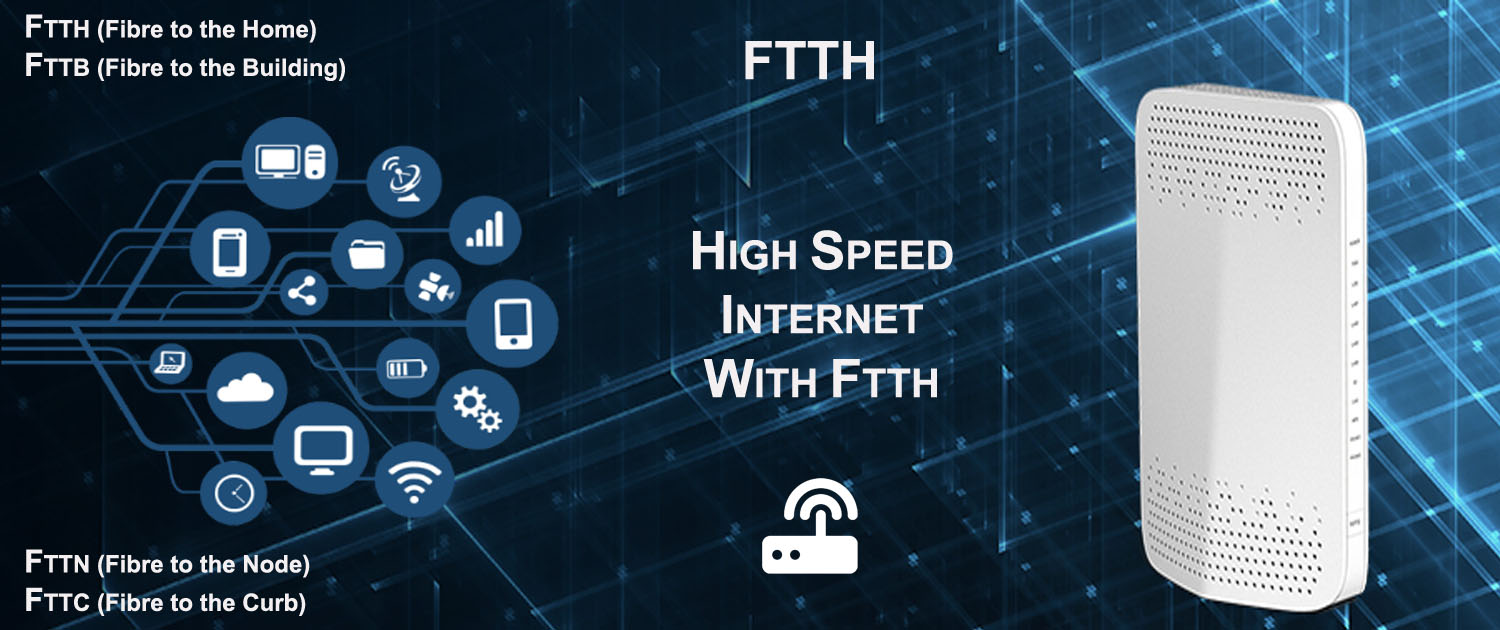
About FTTH (Fibre to the Home)
FTTH stands for "Fibre to the Home." It refers to a type of broadband internet connection technology that uses fibre-optic cables to transmit data. These cables are made of thin strands of glass or plastic that transmit light signals, which allows them to transmit data at very high speeds.
About FTTH
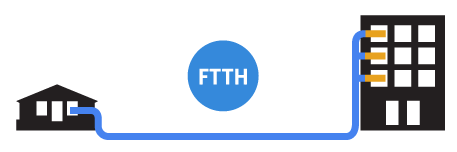
FTTH stands for "Fibre to the Home." It refers to a type of broadband internet connection technology that uses fibre-optic cables to transmit data. These cables are made of thin strands of glass or plastic that transmit light signals, which allows them to transmit data at very high speeds. With an FTTH connection, the fibre-optic cables run all the way from the internet service provider's network to the subscriber's home, providing a direct connection to the internet. This contrasts with other types of broadband connections, such as DSL or cable, which use traditional copper wires or coaxial cables to transmit data. FTTH connections are known for their fast speeds and high reliability, making them a popular choice for internet service providers and consumers alike.
Benefits of FTTH Networks:
- High Speeds: One of the biggest benefits of FTTH networks is their ability to provide extremely fast internet speeds. Because fibre-optic cables are capable of transmitting data at very high speeds, FTTH connections can offer download and upload speeds that are significantly faster than other types of broadband connections.
- High Reliability: FTTH networks are also known for their high reliability. As fibre-optic cables are made of glass or plastic, they are not prone to the same kind of interference or degradation that can affect other types of cables. This means that FTTH connections are less likely to experience interruptions or slowdowns due to factors such as weather or distance from the network.
- Future-Proof: As internet usage continues to grow and demand for faster and more reliable connections increases, FTTH networks are well positioned to meet these needs. Because fibre-optic cables are capable of transmitting data at very high speeds, they have the potential to support a wide range of future applications and technologies.
- Cost-Effective: In some cases, FTTH networks can be more cost-effective in the long run compared to other types of broadband connections. Because fibre-optic cables are less prone to damage and have a longer lifespan than other types of cables, they may require fewer repairs and replacements over time.
Is FTTH climate friendly?
FTTH connections can be a more environmentally friendly option for internet service compared to other types of broadband connections. A few reasons why FTTH connections may be considered more climate friendly are:
- Energy efficiency: Fibre-optic cables transmit data using light signals, which require less energy compared to traditional copper or coaxial cables. This means that devices connected to an FTTH network will likely use less energy compared to devices connected to other types of broadband networks.
- Fewer repairs and replacements: Fibre-optic cables are less prone to damage and have a longer lifespan than other types of cables, which means they may require fewer repairs and replacements over time. This can reduce the overall environmental impact of maintaining an FTTH network compared to other types of networks.
- Reduced emissions: Because fibre-optic cables are capable of transmitting data at very high speeds, they may be able to support more internet usage per unit of energy compared to other types of networks. This could potentially lead to reduced emissions from internet usage over time. Also, glass or plastic are durable materials that do not need to be upgraded or replaced, allowing for a very long-life cycle, reducing waste and CO2 emissions coupled with such a network upgrade.